


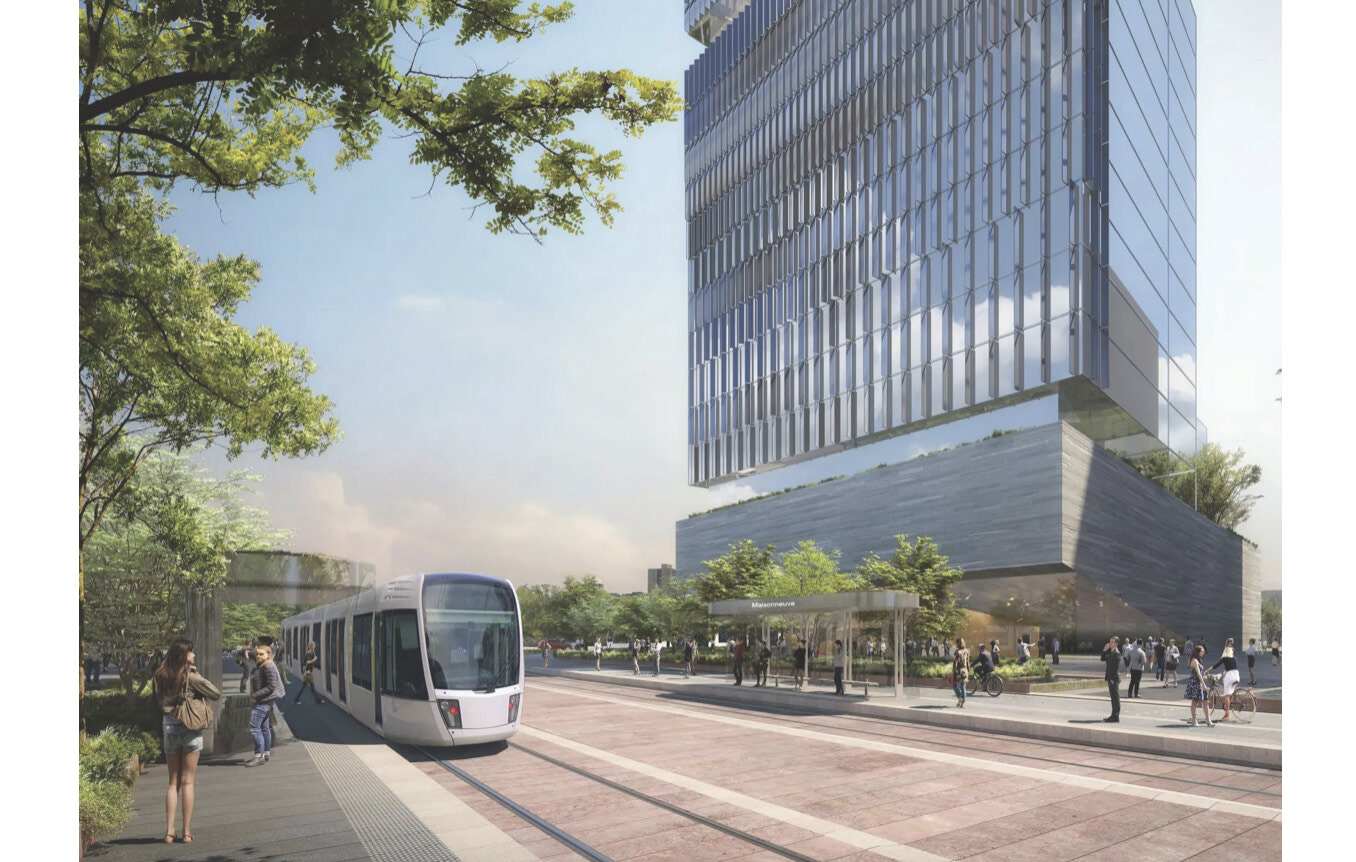
A petition from Aylmer is pushing for a referendum on TramGO, Gatineau's planned tramway, even as the route, cost and financing pass to a provincial agency now redrawing the project. Photo: Courtesy of TramGO
Aylmer petition pushes for a referendum on the Gatineau tramway
Tashi Farmilo
An Aylmer resident's petition demanding that Gatineau put its planned tramway to a public vote has gathered more than a thousand signatures and is back in local debate as the cost of the project climbs and control over its future shifts to the province. Dany Gravel launched the petition, titled "Non au tramway sans référendum," on petitionenligne.com during last fall's municipal election campaign, addressing it to the mayor and city councillors and arguing that a financial commitment this large should not proceed without direct consent from residents.
The petition's online page lists 1,029 signatures, with 809 of them collected in 2026, and gives a launch date of September 24, 2025. It sets out three grounds, paraphrased here: that the cost runs into several billion dollars and threatens a lasting increase on every resident's tax bill, that surface construction along the main arteries would worsen car congestion for years, and that the work and permanent infrastructure would change the character of the neighbourhoods the line crosses. It asks the city to hold a referendum under Quebec's Act respecting elections and referendums in municipalities.
Gravel has argued that the project, estimated at $4.4 billion in 2017, could climb as high as $15 billion, and that the petition was meant first to push election candidates into taking a clear position. In written answers to the Aylmer Bulletin, he also argues that the money would be better spent improving existing service through reserved lanes, more frequent buses and electrification, and that buses stay more adaptable than fixed rail. Some of the sharper figures circulating alongside the petition, such as tax increases of up to 70 per cent, originate with the Quebec City opposition group Québec mérite mieux and rest on that group's own assumptions rather than on official forecasts.
City hall does not share the petition's premise. Mayor Maude Marquis-Bissonnette, a vocal supporter of the tramway, said in a written statement issued after the province's June cost update that the latest analysis validates years of work on the file. The municipal opposition party Gatineau ensemble has taken a middle position, saying the need to improve transit in the west is real and documented, but that residents need to know how much public money is potentially at stake.
What residents may not realize is that the project's direction now sits largely outside Gatineau's control. The Quebec government handed planning to the agency Mobilité Infra Québec in February and asked it to review the project and propose adjustments to keep it within a responsible financial framework. In June, the agency estimated the 24-kilometre line at about $8 billion, roughly four times the 2018 figure, and its president, Renée Amilcar, said the agency does not want to build it in that original form, pointing instead to a smaller first phase that could be scaled up over two or three stages and might draw in private investors. Amilcar has said the 24-kilometre, $8-billion version will not be among the five recommendations the agency delivers in November. The president of the STO board, Edmond Leclerc, has predicted an optimized route that would not necessarily match the original, while insisting any version must connect the downtowns of Gatineau and Ottawa. The line, as currently drawn, would link Aylmer and the Plateau to downtown Ottawa.
That shift in control points to a practical weakness in the petition as written. It asks Gatineau council for a referendum on scope and spending that council no longer sets, since the route, the price and the financing are now being decided by the province, its agency, and the federal and possible private partners helping to pay for it.
The stronger argument may not be a simple yes or no on a plan that keeps changing, but a demand for binding public consultation on the financing terms and on the size of the local share before the agency locks in its recommendations in November. Framed that way, the question moves from whether Gatineau should ask permission to build, to whether the people paying for the project get a say in the deal being struck on their behalf.
Residents who want real leverage may find it more effective to direct their demands at the Quebec government and Mobilité Infra Québec, and, with a provincial election set for October 5, at the provincial candidates seeking their votes.