


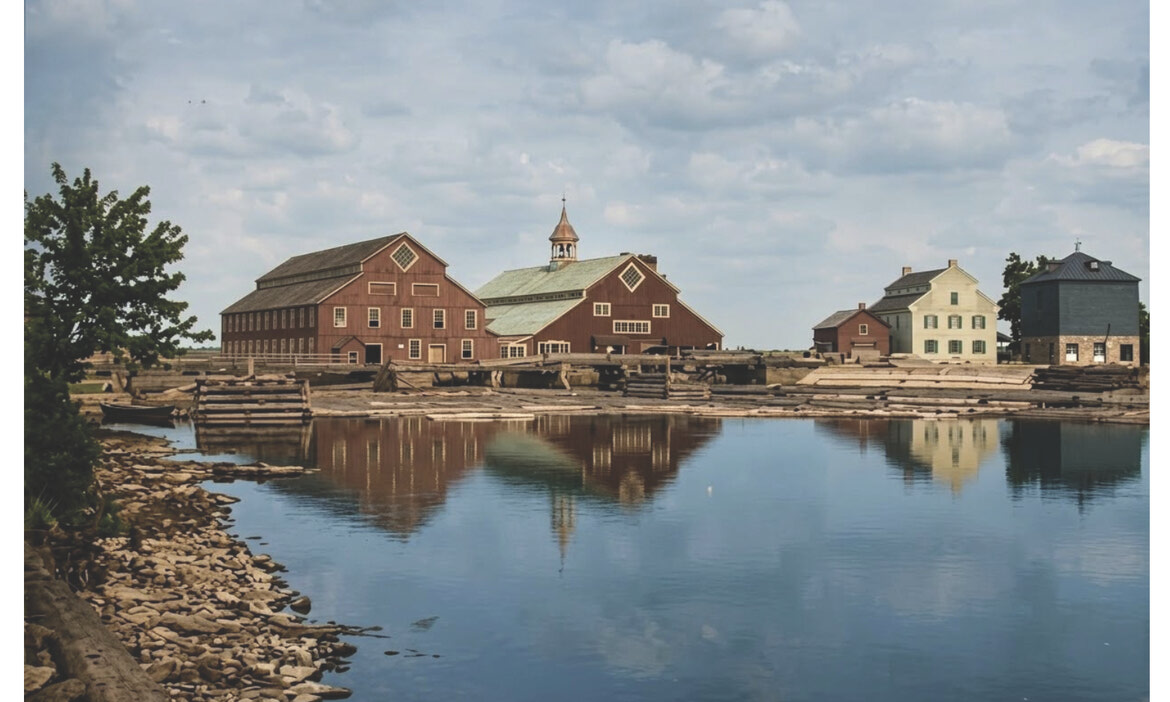
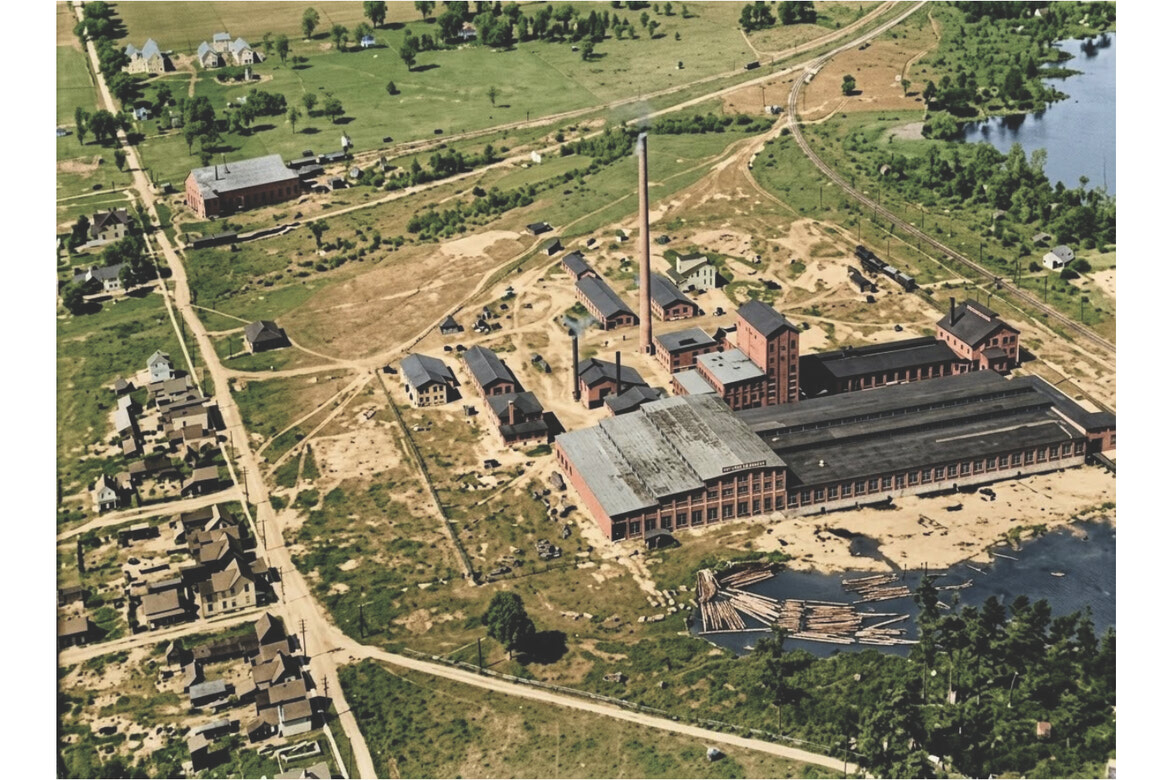
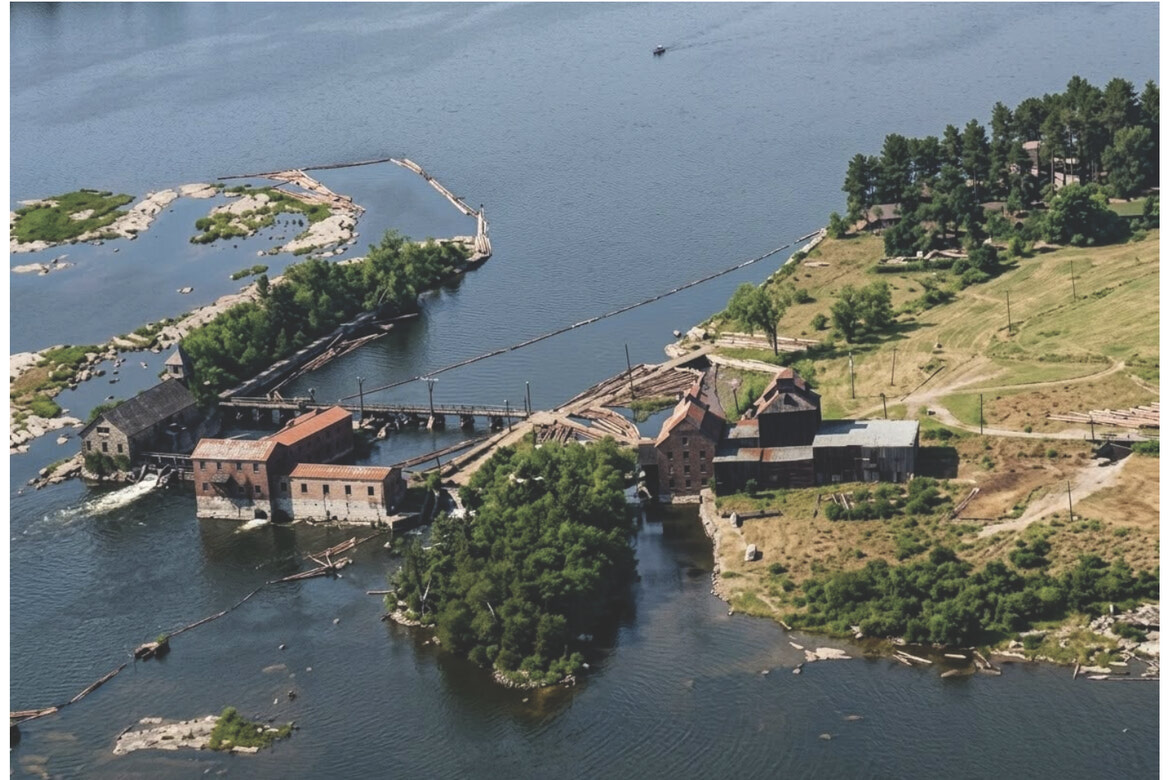
Deschênes before the ruins, lot 15 and 16 range #1
Charlie Trinque
In 1802, 35-year-old James McConnell from Prince Edward Island settled in the farming community of Philemon Wright along with his two brothers, William and George. The McConnells were part of the second wave of permanent settlers in the area.
In 1810, James leased lot 15 and cleared the land for agriculture. He built the first mill, a fulling mill, a specialized, water-powered factory used to process and finish locally woven raw wool fabric by soaking, pounding and shrinking it to eliminate oils, dirt and other impurities. He excavated a mill race to the mill, a newly dug canal that channeled water to power the mill. It spanned from the east of the Deschênes road all the way to the rapids and can still be seen when you walk in the bush between Martel Street and the river. This was the very beginning of the village of Deschênes Mills.
Around the same time, Hamar Humble Day, often referred to as Ithamar Day, and Murdoch McGilvary established a not-so-profitable fur trading post at the rapids. They also operated a forge and the fulling mill. They lost money on these ventures and left around 1826.
In 1826, the McConnell brothers built the first sawmill on the rapids of Lake Deschênes (Kettle Lake).
In 1857, Robert Conroy and his wife Mary, daughter of William McConnell, settled in Aylmer and built both the British Hotel and the Grist Mill on the rapids.
That same year, Mary Conroy bought the farm on Lot 15a Range #1 from her father for five shillings (the equivalent of 70 cents today), an acre near the Deschênes rapids, and transformed it into one of the most prosperous dairy farms in the Outaouais. This farm would later become part of the community of Lakeview Terrace.
Conroy also modernized the sawmill and built a second one, which produced nearly 30 million board feet of lumber in one season. Nearly 200 sawmill workers settled on Lots 15 and 16 along the Ottawa River near the rapids, in the village of Deschênes Mills.
Records from 1894 show that wood from the Deschênes Mill was used to construct the Simmons General Store on the Simmons-Moffatt Road (now Vanier Road) at a cost of one cent per board foot.
In 1895, the sawmills were struck by lightning and destroyed by fire.
In 1896, Robert and William Conroy built one of the two hydroelectric power stations at the Deschênes rapids, the first was the Deschênes Electric Company. The second one was built by the Hull Electric Company to power their trains to Queen's Park. These two power generating stations were closed in 1947 as the Hull Electric Train stopped running, and the Nickel Refinery was gone. The Chaudière Falls on the Ottawa River and the Chelsea Dam on the Gatineau River were now supplying power to the area. Some of the ruins of these buildings on the Deschênes Rapids are still standing today.
In 1916, the British North American Nickel Corporation built a 170,000 square-foot nickel refinery. It operated for seven years, closing in 1923 for some unknown reason by Prime Minister William Lyon Mackenzie King. The ruins became the playground for Deschênes' youth for over 60 years and were finally cleaned up with the construction of the Madaire Park project in 1985.
In 1920, the village of Deschênes was incorporated and, in 1923, the Catholic parish of Saint-Médard was formed.
Sources: Histoire Patrimoine et Education and Google Search
For more local history, join "A Walk Down Memory Lane Aylmer" on Facebook.