


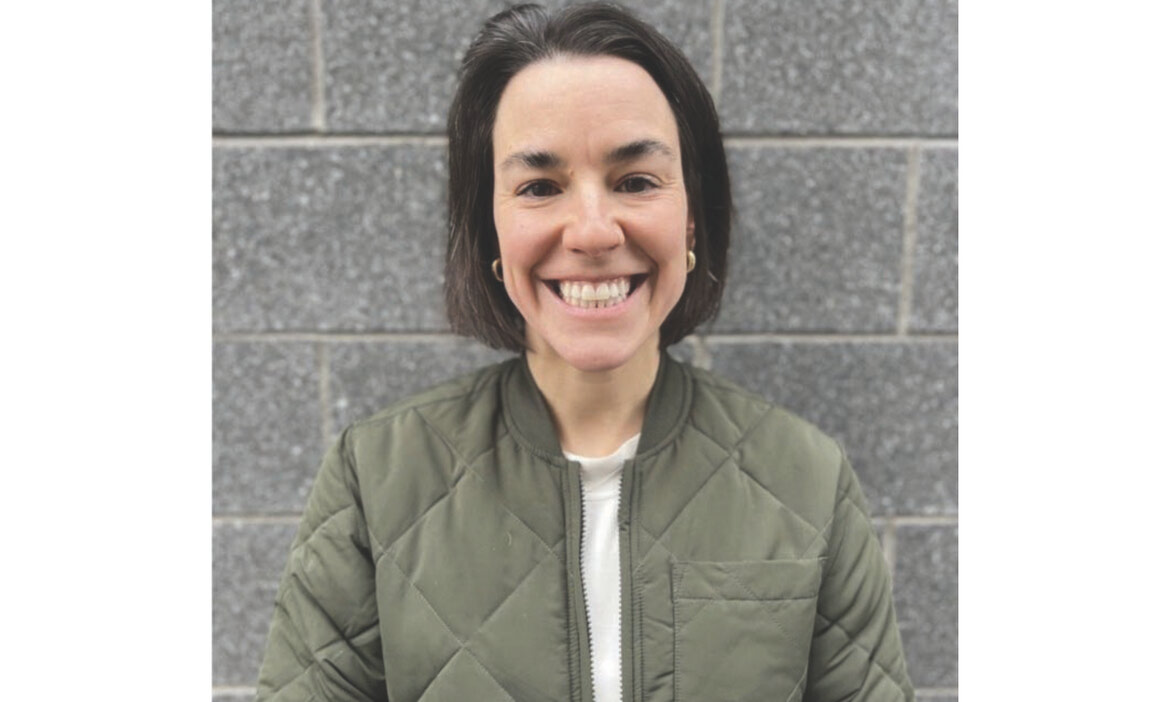
Dr. Anne-Frédérique Lambert-Slythe explains overdose risks in new Balade santé episode
Tashi Farmilo
Drug poisonings and overdoses, and the unpredictable street supply behind many of them, are the subject of the newest episode of Balade santé, the podcast produced by Quebec’s Ministry of Health and Social Services. The episode, released October 20, features a harm-reduction worker who has lived with addiction and a public health physician. They explain why deaths keep climbing across the province, how to recognize someone in danger and what bystanders can do to save a life.
The guests are Vincent de Maisonneuve and Dr. Anne-Frédérique Lambert-Slythe. De Maisonneuve is a harm-reduction project officer with the Association québécoise pour la promotion de la santé des personnes utilisatrices de drogues, a provincial group made up of people who use or have used drugs. Lambert-Slythe is a specialist in public health and preventive medicine who also treats patients who use drugs. The ministry designed the series to be heard outdoors while walking or running.
The episode draws a distinction that runs through the whole conversation. Taking a substance may be deliberate, but an overdose is not: it is a severe, unintended poisoning that threatens a person’s health or life. Much of today’s danger comes from contamination, with people buying one drug and unknowingly receiving another, often far stronger. Health Canada likewise attributes the crisis to an illegal supply it describes as dangerous and toxic.
Lambert-Slythe put Quebec’s current toll at roughly 52 deaths a month. She added that stimulants such as cocaine and methamphetamine now figure in at least as many of those deaths as opioids. Many official figures are provisional: the province’s public health institute counts both deaths confirmed by a coroner and those where evidence points to drug poisoning but the final cause is not yet established. By that measure, the institute recorded 645 drug-related deaths in 2024, a provincial record, and 596 more between April 2025 and March 2026.
Lambert-Slythe traced the change in the drug supply to around 2019 and 2020, when pandemic border closures left people buying whatever they could find. Counterfeit hydromorphone containing fentanyl appeared first. Today, fentanyl is often mixed with even stronger analogues, with benzodiazepine-type sedatives and with drugs used in veterinary medicine. De Maisonneuve noted that people who use drugs rarely think of death as a possible outcome, any more than most people consider alcohol poisoning when they drink at a party.
Lambert-Slythe singled out people leaving jail, a hospital or residential treatment as particularly vulnerable. After time without using, their tolerance has dropped, but they may return to the amount they once took.
She also described the signs of an opioid poisoning. It typically starts with heavy drowsiness, followed by slowed breathing, an unusual snoring sound, pinpoint pupils and blue lips, until breathing and eventually the heart can stop. Stimulant poisonings are different, bringing agitation, hallucinations, seizures or cardiac symptoms, and no antidote exists for them.
For a suspected opioid poisoning, the advice is to call 911 and give naloxone. Naloxone reverses only opioids but causes no harm if the person has taken something else, so there is no reason to hesitate. With today’s stronger opioids, several doses may be needed. A person who wakes up should not be left alone, because naloxone can wear off before the opioid does and the poisoning can return. The guests also warned that drugs cut with medetomidine, a veterinary sedative, can leave someone breathing again but still unconscious, since naloxone does not act on that substance.
Both guests spoke from experience. De Maisonneuve said he once lived with dependence and managed to function only partly, and that working in prevention helped him break his patterns. Lambert-Slythe described a patient she has followed for years, a woman who used cocaine and opioids and was living on the street. Because the patient was not ready to stop, Lambert-Slythe prescribed a treatment along with tablets meant as a safer alternative to street drugs. The patient crushed and injected the tablets and overdosed on them, and Lambert-Slythe ended those prescriptions. The woman later cut back, returned to the street market, was incarcerated and then completed six months of residential therapy. Three months on, she has stopped using. Lambert-Slythe presented the story as an illustration of how people move back and forth along a continuum of substance use over a lifetime.
The guests also discussed drug-checking services, which can return results in about 15 minutes and send unusual samples to specialized laboratories so public health can issue warnings. In the Outaouais, CIPTO, a harm-reduction organization at 145 Eddy St. in Hull, offers a mobile supervised consumption service and distributes naloxone kits, fentanyl test strips and drug-checking tools.
For people who use alone, de Maisonneuve recommended a remote accompaniment service. Callers stay on the line with someone who can send help if they stop responding. The service is run by Drogue: aide et référence and available day or night, in French or English, at 1-800-265-2626.
The guests argued that overdoses cannot be reduced to personal choices, pointing instead to mental health, housing, isolation and stigma. De Maisonneuve called for a safer drug supply, an end to criminalizing people who use drugs and a greater voice for people with lived experience in decisions that affect them. Lambert-Slythe closed by encouraging listeners to learn more about these substances and the people who use them, noting that someone in almost everyone’s circle probably does.
The episode is one of 17 Balade santé instalments since the series launched June 17, 2025, with an episode on child protection. Episodes in 2025 covered the health effects of heat, end-of-life care including medical assistance in dying, active aging, vaccination, family caregiving and unstructured play as an alternative to screens. This year’s episodes have covered gastroenteritis, when to treat common viruses at home versus seeking care, feeding young children, the Ma grossesse pregnancy service, syphilis, elder abuse, protection from ticks and mosquitoes, energy drinks and the role of public health.
Listen to Balade santé on YouTube: https://www.youtube.com/playlist?list=PLHCIr1T5nD1-DzvTCKnalPpuHRbuBU8fk