


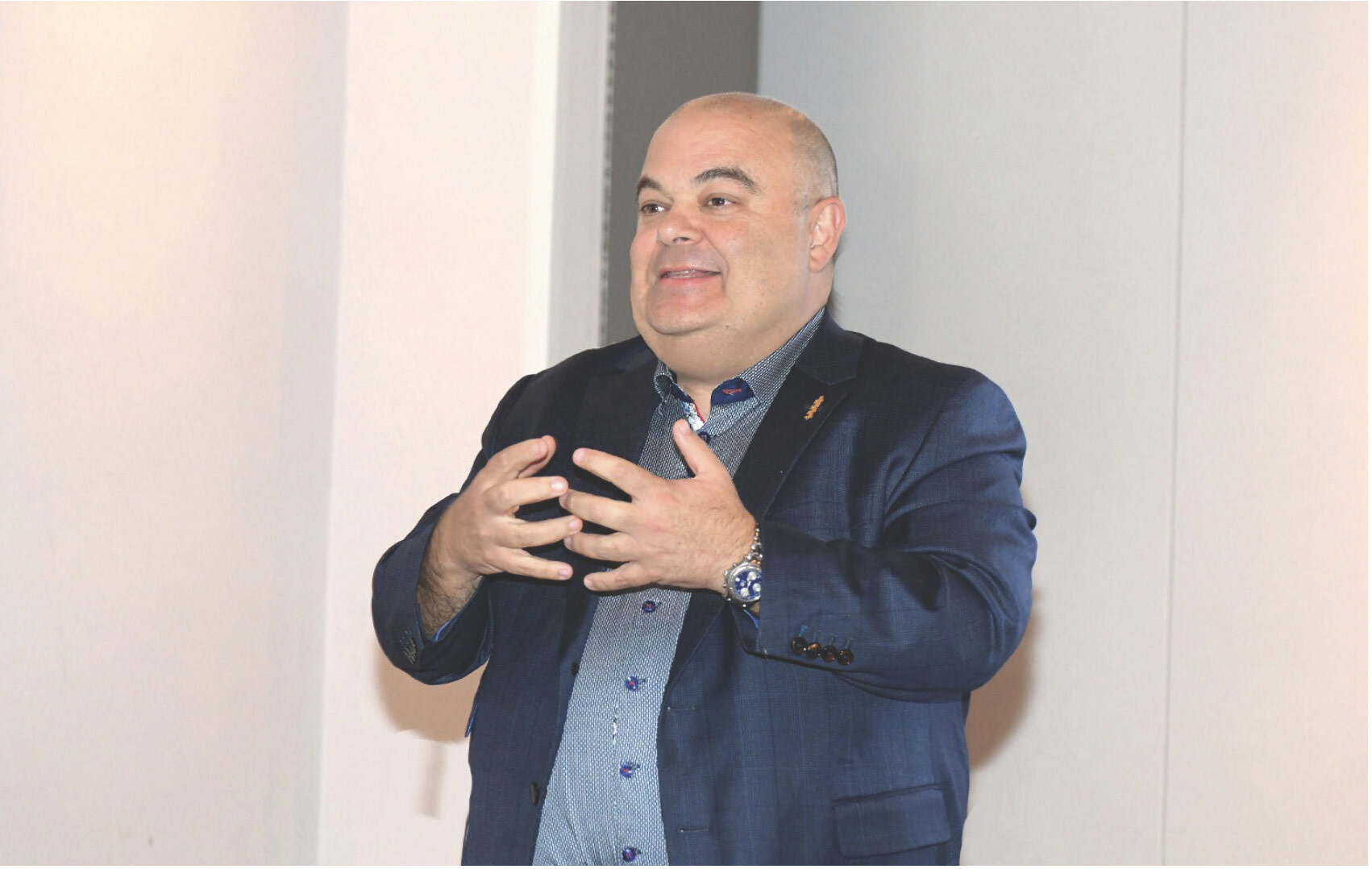
FMOQ president Dr. Marc-André Amyot acknowledged a continuing shortage of family doctors across Quebec as the province announced May 27 that it had surpassed its target of registering 500,000 more people with a family doctor, a milestone landing in the Outaouais after the region lost 24 family physicians and primary care for roughly 15,000 patients in the wake of Bill 2. Photo: Courtesy of the FMOQ Facebook page
In the Outaouais, Quebec's family doctor milestone is hard to see
Tashi Farmilo
The Quebec government says it has beaten its targets for connecting people with a family doctor, but in the Outaouais, the bigger story this year has been the 24 family doctors who walked away, taking primary care for some 15,000 patients with them. Health Minister Sonia Bélanger, who is also responsible for seniors and informal caregivers, announced May 27 that the province has surpassed the patient-registration targets set out in its agreement with the Fédération des médecins omnipraticiens du Québec (FMOQ), reaching them before the original June 30 deadline.
Province-wide, the government says 500,000 more people now have a family doctor or a family medicine group, 180,000 of them vulnerable patients. Those targets come from a five-year deal struck with the FMOQ late last year, after months of confrontation over Bill 2, the contentious law passed at the end of October that linked physician pay to access-to-care targets and triggered a wave of resignations.
The Outaouais bore the brunt. The regional health authority, CISSSO, said in February that 24 family doctors and nine specialists had finalized their departures since Bill 2 was passed, and estimated that about 20 of the family doctor exits were tied directly to the law. The agency put the number of residents in the process of losing their family doctor at roughly 15,000, in a region where about 55,300 people had no family doctor when Bill 2 was adopted. Several of the physicians who left took their practices across the river, applying for licences with the College of Physicians and Surgeons of Ontario or taking positions at facilities such as Montfort Hospital in Ottawa.
It could have been worse. The regional family doctor group initially counted 41 confirmed departures in early December, with close to 37,000 patients projected to lose their doctor. After the Coalition Avenir Québec government backed down and amended Bill 2 in mid-December, alongside an agreement in principle with the FMOQ, some physicians reversed course. The retooled law took effect February 28.
For residents still left without a doctor, the route back is the Guichet d'accès à un médecin de famille, the provincial waiting list, which can be joined online or by phone. A nurse reviews each file and assigns a priority code from A to E, with chronic illness, pregnancy or advanced age pushing a person higher. There is no way to predict the wait, since it hinges on the number of doctors and unattached patients in the territory. In the meantime, those on the list can call the Guichet d'accès à la première ligne for a consultation. The latest data available, from October 31, 2025, counted 624,480 people across Quebec on the list.
Bélanger did not declare the job done. She said there was still work to do but called the progress concrete, crediting the result to family doctors, their teams and other front-line professionals across the province.
FMOQ president Dr. Marc-André Amyot acknowledged the staffing pressures regions like the Outaouais still face. "Despite a shortage of family doctors," he said, "doctors from every region have agreed to rethink the organization of front-line care. These improvements will particularly affect the thousands of vulnerable patients whose needs are significant."