


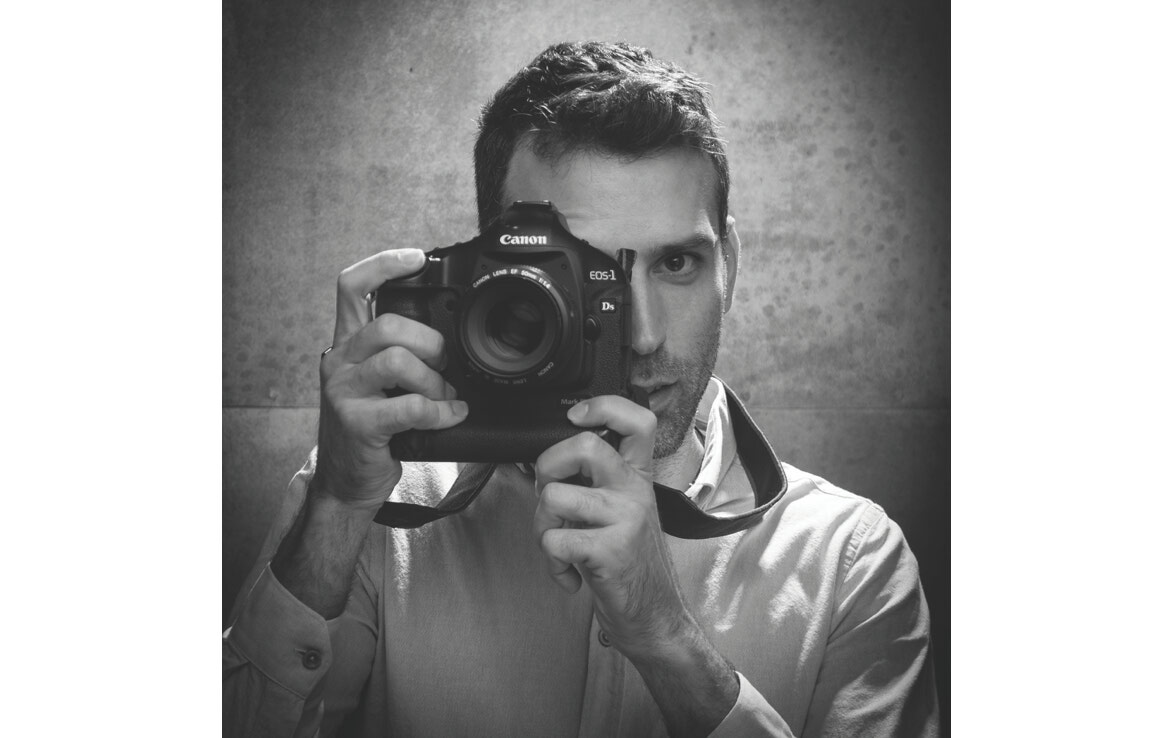
Jihef Portelance, a Gatineau photographer and filmmaker who was bullied throughout his school years, has drawn on that experience to direct his first short film, a wordless ten-minute drama called Paradise about teen bullying and suicide that he hopes to bring to festivals to reach victims and perpetrators alike. Photo: Courtesy of Jihef Portelance
Local filmmaker turns his own experience with bullying into a silent short about teen suicide
Tashi Farmilo
Jihef Portelance, a photographer and filmmaker who returned to his hometown of Gatineau in 2025, spent August 17 and 18 shooting his first short film, a wordless ten-minute drama meant to reach anyone who has been touched by bullying, and to move the people who inflict it. He has carried the idea for more than 20 years, drawing on his own experience to do something he hopes can help.
The idea first came to him around 2002, he says, from a song he still loves called, Paradise (Not for Me) by Madonna. “Something about it just spoke to me a lot," he said. Listening to it, he began picturing the story of a teenager who is bullied at school and ends his own life. He kept the vision but not yet the means to make it. He trained first as a photographer at La Cité, a French language college in Ottawa, then studied cinema at O'Sullivan College in Montreal in 2014, where he learned to write a script and run a production from pre-production through to the edit.
For years the script sat unused. He worked in the industry in Montreal, struggled to move his vision forward, and found his mental health declining. Returning home, he says, he began to feel better and resolved to try again. What he could not get moving in Montreal took off quickly once he posted in the Ottawa Filmmakers group on Facebook. A local producer and actor, the father of twins who appear in the film, reached out and helped him pull the production together, calling in contacts to borrow an ambulance and a police car at no cost. "Here I had people really backing me up," Portelance said. "We're doing this; we're not stopping."
The film is called Paradise, after the song, though the title reaches further than any single ending. "Paradise can be subjective to everybody," he said. "Not everybody has the same vision, or the same belief of what paradise can be." There is no dialogue. The story is told through music, emotion and slow motion, following a family in the moments after they learn their teenage son has died, and the paramedics, police and neighbours who gather. The cast runs from those leads through a heavenly figure who appears at the end to the teenagers Portelance recruited to fill the school hallways.
Given the weight of the material, he brought an intimacy coordinator onto the set and worked out gentler stand in words with the cast, saying "jelly" in place of blood, for instance, so that repeating harder language all day would not wear on anyone. "It can actually affect even the actors," he said.
Portelance draws the film from his own life. He was bullied through his school years, he says, singled out for being different and, in his words, more feminine than the boys around him; it was in high school that he was bullied for being gay. Classmates mocked his name and left slurs where he would see them. He remembers, on one occasion, being too frightened to name the boy who tormented him even when an adult pressed him directly. Growing up in the nineties, he says, the unspoken rule was "you have to be a man" and could not show your feelings, so he kept a wall up and said little, even to close friends.
He believes it is harder now. "Back in the day it was just one, or a little group of people, aiming at one person," he said. "Now people on social media just write whatever they want, and most of the time they hide behind a fake profile." Before, he added, at least the person was facing you.
Portelance also passed along something a prevention worker taught him during the shoot. She asked him to stop saying a teen "committed suicide," a phrasing rooted in an era when suicide was treated as a crime. The accepted term now, he learned, is that a person "died of suicide."
His aim is to finish the edit and bring the film to festivals, and perhaps to television, to widen awareness. Bullying, he stresses, is not only a schoolyard problem. "It happens to all people of all different ages," he said. "It's not just young people in school. It could be anybody, at any age, anywhere."
If you or someone you know is struggling, help is available. In the Outaouais, call the Quebec suicide prevention line at 1 866 APPELLE (1 866 277-3553), free and around the clock, or reach Tel-Aide Outaouais in Gatineau at 819-775-3223. In an emergency, call 911.