


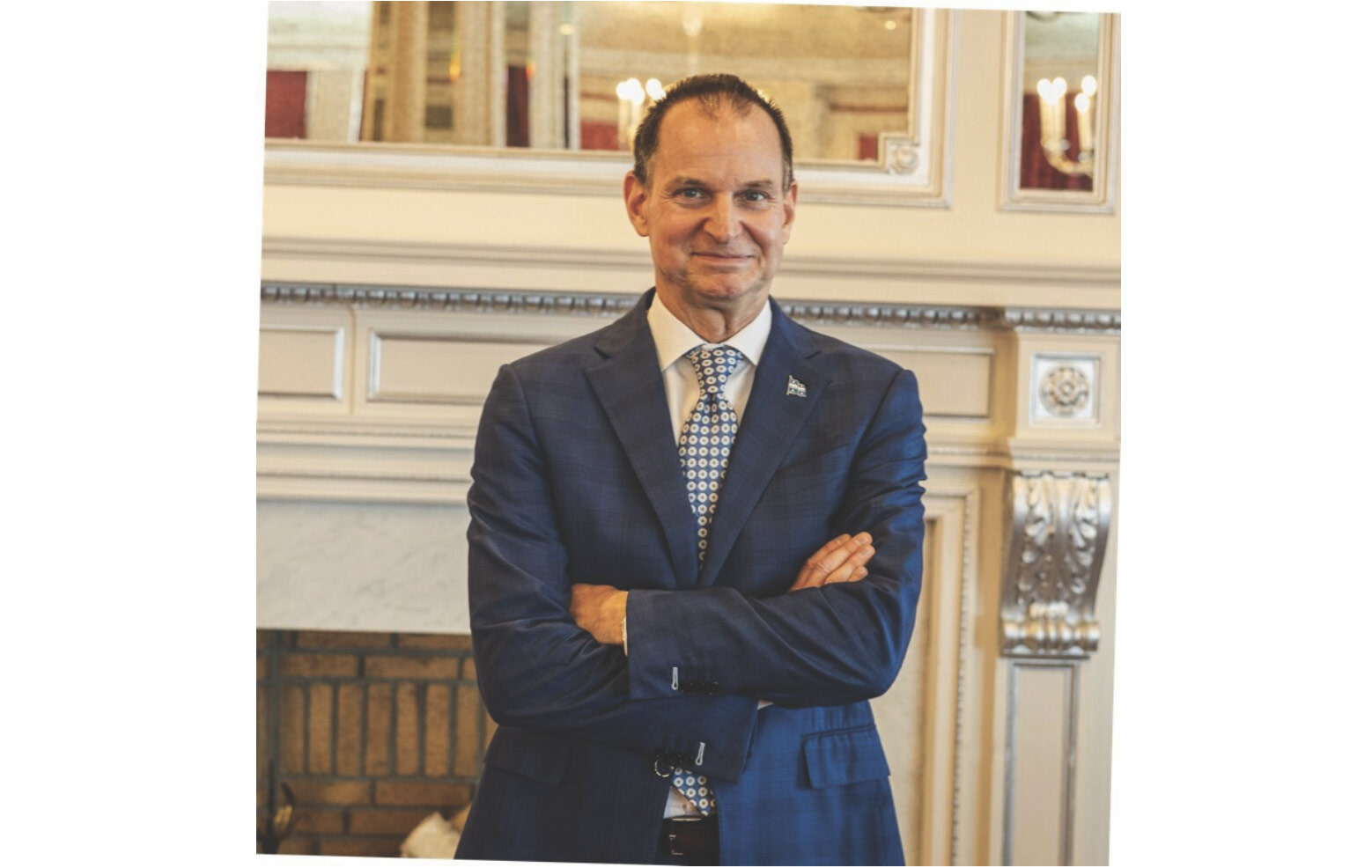
Quebec Finance Minister Eric Girard tabled the province's 2026-2027 budget on March 18, bringing the Outaouais a first concrete step on its long-awaited hospital, targeted relief for its forestry sector, and a share of province-wide spending on healthcare, housing, and families. Photo: Courtesy of Quebec Finance Minister Eric Girard’s LinkedIn page
Quebec budget 2026-2027: What the Outaouais gets
Tashi Farmilo
Quebec Finance Minister Eric Girard tabled the province's 2026-2027 budget on March 18, alongside a ten-year infrastructure plan worth $167 billion. Here is what both documents confirm for the Outaouais and its residents.
The Hospital:
The Outaouais is one of the only regions in Quebec without a university-affiliated hospital. Residents requiring specialized care have historically had to travel to Ottawa or Montreal, or go without. The Quebec Infrastructure Plan 2026-2036 specifically names the Centre hospitalier affilié universitaire de l'Outaouais in Gatineau as one of a small number of projects receiving preparatory work, described in the document as some of it urgent, from a $2.3-billion province-wide envelope for hospital construction, reconstruction, expansion, and redevelopment. This marks the first time the project has been named for active preparatory work in a government infrastructure document. The document does not include a standalone budget for the project, a construction timeline, or a completion date. The hospital remains at the planning stage. How much of the $2.3-billion envelope is allocated to Gatineau versus other hospitals across the province is not specified in either document. Province-wide, the infrastructure plan sets aside $24.7 billion over the decade for health facilities, with $13.4 billion going toward maintaining existing buildings.
Healthcare:
The province's health and social services budget grows by 4.1 per cent in 2026-2027, and on top of that baseline increase the budget commits $2.168 billion over five years to improve access to care across Quebec. None of it is designated for the Outaouais specifically. Santé Québec, the provincial health authority, is responsible for deciding how those resources are distributed among regions based on population, health characteristics, and regional needs. Within that province-wide envelope, $756.2 million over five years goes toward drug access, including funding for hospital treatments and accelerated access to new medications. Surgical wait times receive $200 million over five years, and front-line care receives $164.8 million over five years, including funding to expand pharmacists' scope of practice and to implement a new payment model for family doctors. How much of any of these envelopes flows to the Outaouais, and on what timeline, is not addressed in either document.
Transit:
Gatineau has been seeking a rapid transit solution to improve mobility across the city and better connect its corridors for years. The infrastructure plan references continued planning of a structuring electric transit project between western Gatineau and downtown Ottawa as part of its $1.2-billion public transit allocation. No dollar figure is attached to the Gatineau project and it remains at the planning stage.
Forestry:
The forestry sector is a significant employer in the rural Outaouais, particularly in the Pontiac and Haute-Gatineau MRCs, and American tariffs on Canadian softwood lumber now exceeding 45 per cent following an escalation in the summer of 2025 have put serious pressure on sawmills and related operations. The budget sets aside $365.1 million over five years for the sector province-wide, including $60 million available this year to sawmills and wood-processing operations for working capital and adaptation investments, providing immediate relief to businesses at risk of curtailing operations or laying off workers. Over five years, $104.5 million eliminates an annual levy on wood supply licences, directly reducing operating costs for forestry companies, while a two-year exemption from health payroll contributions worth $129 million province-wide across 2026 and 2027 frees up cash for companies managing thin margins. An additional $179.9 million over two years sustains tree planting and forest management on public land. The only line in the 426-page budget document that names the Outaouais specifically is a $3-million top-up to a program that helps operators in the Outaouais and Laurentides sell low-grade hardwood that is otherwise difficult to move commercially, addressing a specific challenge faced by hardwood producers in the region who lack the market access available to softwood operators.
Families:
The government is converting 5,000 more non-subsidized daycare spaces into subsidized spots across the province, bringing the daily parent rate to $9.65 for families whose daycare is selected. For Outaouais families currently paying full market rates at unsubsidized facilities, which can run well above $50 per day, a conversion would represent a significant reduction in monthly childcare costs and improve the financial accessibility of the subsidized network. School taxes are capped at a three-per-cent increase for 2026, with the province covering the difference owed to school boards. Outaouais homeowners will see a smaller property tax increase than they would have faced without the cap.
Housing:
The Outaouais housing market faces particular pressure due to its proximity to Ottawa, where property values and rents have risen sharply in recent years. The budget commits $740.9 million over three years across Quebec for affordable housing, covering new units, emergency rent assistance for households at risk of losing their homes, and renovations to existing social housing. The funding is not designated by region, but Outaouais applicants and municipalities are eligible to access these programs.
Projects Completed in 2025-2026:
Several projects serving Outaouais residents directly crossed the finish line in 2025-2026. The new Maison des aînés in Maniwaki, which replaces a former CHSLD that had been serving seniors in the Haute-Gatineau for decades, was completed at a total cost of $127.4 million, fully funded by Quebec. A refurbishment of Route 148 in the Pontiac, a key road artery for one of the region's most rural MRCs, was completed at a cost of $24.4 million. The Lucy-Faris Library in Aylmer was rebuilt and expanded at a total project cost of $26 million, with a Quebec government contribution of $5 million. A 199-unit social housing building in Gatineau was completed at a total project cost of $82.2 million, with Quebec contributing $26.3 million, adding to the region's stock of affordable units at a time of significant housing pressure near the National Capital Region.
The Deficit:
Quebec is projecting a deficit of $8.6 billion for 2026-2027, with a return to a balanced budget targeted for 2029-2030.