


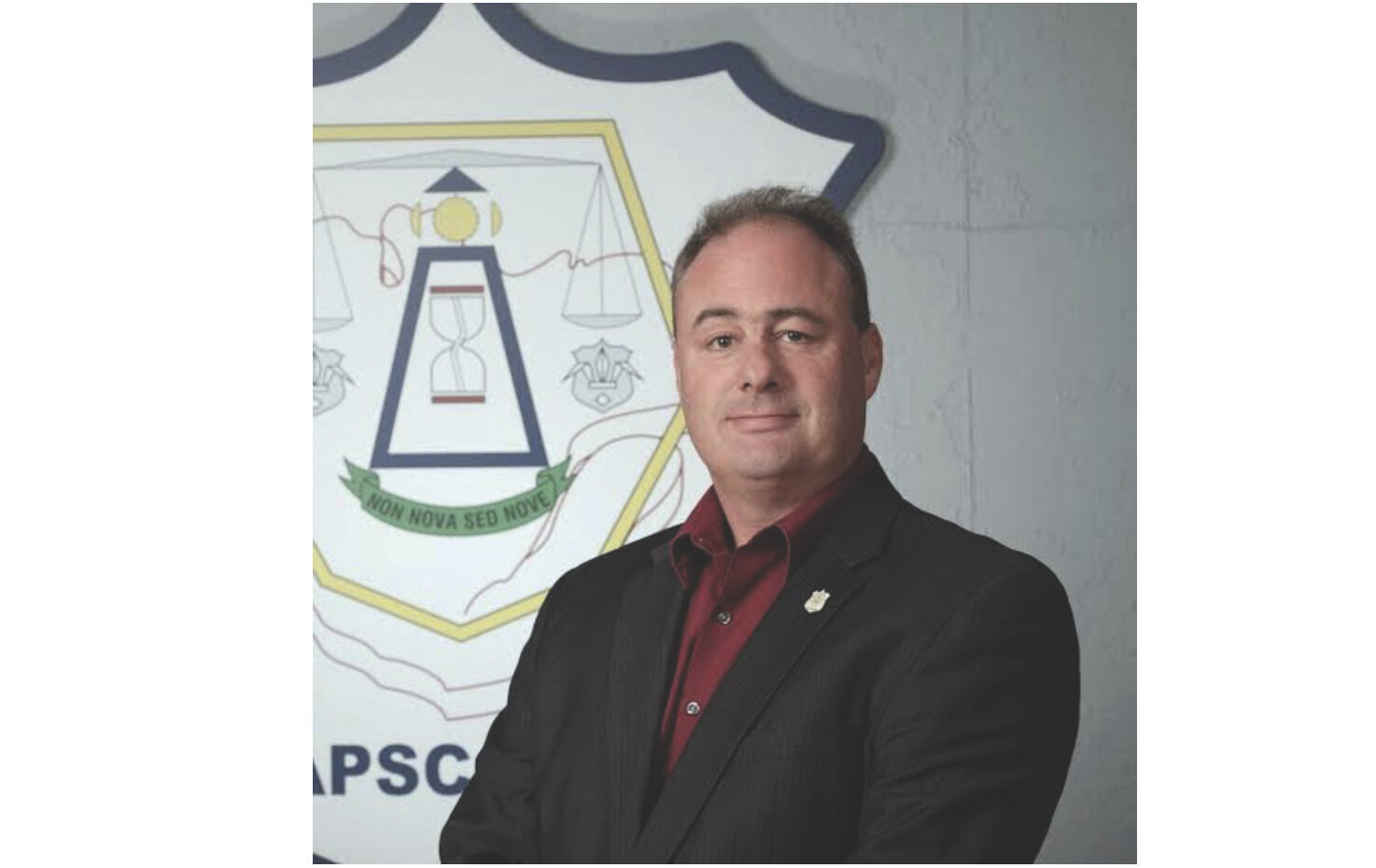
Mathieu Lavoie, president of Quebec's correctional officers' union, says drone smuggling, violence and overcrowding are worsening at the aging Hull Detention Centre, while the Ministry of Interior Security maintains its jails are safe and reports serious-injury incidents falling. Photo: Courtesy of Syndicat des agents de la paix en services correctionnels du Québec
Union president says drones and violence are rising at Hull's aging jail
Tashi Farmilo
Drone smuggling, violence and overcrowding are getting worse inside the Hull Detention Centre, the president of Quebec's correctional officers' union, Mathieu Lavoie, told the Aylmer Bulletin, pointing to years of underinvestment and staffing shortages at the aging Gatineau jail as the province prepares to tighten inmate discipline rules on September 28.
Lavoie, who heads the Syndicat des agents de la paix en services correctionnels du Québec (SAPSCQ-CSN), says the violence officers deal with has been building for years. "For years now, across the whole network, we've seen a constant rise in violence between inmates, violence against staff, and psychological violence too, the threats, the intimidation," he said. He argues the province's official numbers understate it because of how a serious injury is defined. "For them, it only counts as a serious injury if it risked permanent damage or death, and to me that's a way of trivializing the violence, because if the person doesn't die, it gets minimized."
The threat he raises most urgently comes from the air. "We've been raising the alarm about drones for a long time, and it gets worse month after month," Lavoie said. What was once occasional in the regions now happens at some institutions "every day, several times a day," he said, with drugs, cellphones and weapons dropped over the walls. He describes a trade run for profit. "It's a lucrative market, it's organized by the street gangs, and it lets them finance their criminal activity on the outside." A smuggled phone, in his telling, is more dangerous than it looks. "A cellphone can seem harmless to the public, but in detention it lets organized crime keep running its trafficking, intimidate witnesses and victims, and set up deals on the outside." At Hull, the trouble concentrates in the oldest part of the jail. "We see it mainly in the old section, where the windows get broken so packages dropped by drone can be pulled inside," he said. By his estimate, officers stop only a fraction of it. "We seize maybe 30 to 35 per cent of what comes in, and that's really just the tip of the iceberg, because that's only what we can see and act on."
Crowding, he says, makes the rest harder to control. "When we have to move someone for security reasons and there's no room, we lose our capacity to manage the population inside the facility, and that's the whole network, not just here," Lavoie said. He estimates that people held before trial make up "around two thirds" of those inside. Provincial statistics show remand detainees are now the largest and fastest-growing group in Quebec's jails, up nearly 12 per cent in a year and more than half since 2019-2020.
Staffing runs beneath all of it, Lavoie says. Hull holds up better than many institutions, in his view, but the wider system has thinned since the spring. "We're seeing more absences, people off on sick leave or after workplace accidents, physical and psychological," he said. The union reported about 250 vacant positions and more than 300 officers on leave, roughly a fifth of its members, in late 2025, along with about a hundred resignations a year. Support for officers is expanding, he said, "but specialized resources aren't easy to find."
The state of the building is where he keeps landing, and where he is most direct about what he wants. "The old section of Hull is falling apart. There's water getting into the walls, they've had to put up netting to stop the bricks from falling, and it needs major investment fast. We have to stop deciding that the correctional system isn't worth investing in," he said. He also described a strained relationship between officers and management as a live source of tension inside the jail. A project to repair, modernize and expand the site, estimated in 2024 at more than $50 million, remains in the province's infrastructure plan at the study stage.
The Ministry of Interior Security gives a steadier account. It says its facilities remain safe for staff, inmates, visitors and the surrounding public, and that serious-injury incidents across its jails have in fact fallen, from 49 in 2024-2025 to 20 in 2025-2026. The ministry names drones, contraband phones and violent behaviour as its leading security concerns, and says it is meeting them by securing yards and windows, gradually rolling out drone-detection equipment, regulating the airspace above its jails, analyzing intelligence, working with police and reinforcing the disciplinary process taking effect September 28. Its figures from earlier in 2026 recorded 361 drone sightings across the network between January and March, with 81 per cent of packages recovered, and a single March operation across seven jails, Hull among them, seized about $676,700 in contraband.
On the pressures Lavoie describes, the ministry's position is more measured. It puts Hull's capacity at 232 as of January 31 but does not release occupancy rates by institution, citing security, and it reports no significant staffing shortfall at the jail, describing the Outaouais as a strong pool of candidates. It frames Hull first as a place of rehabilitation, pointing to a reintegration fund behind addiction, suicide-prevention and education programs, to Alcoholics Anonymous and Narcotics Anonymous groups, and to job training in construction safety, road flagging and bicycle repair. Health care, including mental health, falls to Santé Québec, with the jail referring inmates to specialized services such as the Pierre-Janet hospital and drawing on an in-house suicide-prevention team, reintegration officers and a chaplain.
The work is unfolding under a renamed department. In April, Premier Christine Fréchette's government replaced the Ministry of Public Security with the Ministry of Interior Security, led by Deputy Premier Ian Lafrenière, and says its mission for correctional services has not changed. For Lavoie, what happens at Hull turns on whether governments are willing to spend on a place most people never think about. "Investing in prisons isn't popular, it's not a vote-getter for politicians, but it's a necessary evil, it's an essential service in the justice system," he said. "These are people who are inside because they're considered too dangerous to be outside."